
Google Is Changing Search Ads—Here’s What Your Business Needs to Know
Google is rolling out one of its most significant search interface changes in years, and if you’re running search ads (or thinking about it), you need to understand what’s happening.
The short version? Users can now collapse all paid ads with a single tap to see only organic results. And that changes the game.
Google’s Ad Appearance Redesign
Google redesigned how ads appear across its search interface globally. All paid listings now appear under a single “Sponsored Results” header that’s pinned to the top of the screen as users scroll. Instead of individual “Ad” labels next to each listing, everything is grouped together. Google will show a maximum of four text ads in this grouping, and—here’s the big one—users can collapse the entire sponsored section to see only organic results. According to Google, this redesign helps users navigate results pages more easily and better distinguishes commercial content from organic listings, especially on mobile devices. Which sounds great for users. But what about advertisers?
Why This Matters
This isn’t just a cosmetic update. It’s potentially Google’s response to regulatory pressure and user advocates who’ve criticized how results pages have become dominated by sponsored content. And it could fundamentally change how consumers see and interact with your paid listings.
Search ads make up well over half of retail media ad spending—around 59-63% according to eMarketer data. That’s billions of dollars in ad spend that now faces a new challenge.
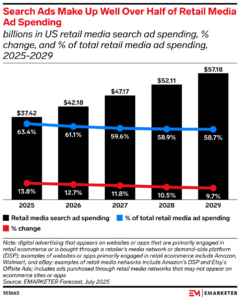
If users start habitually collapsing paid results, advertisers could see declines in traffic on top of the hits they’re already taking from AI-generated overviews capturing user attention.
What This Means for Your Business
The Competition Just Got More Visible
When all paid listings are grouped under a single header, the competition is right there in users’ faces. You’re not just competing for clicks, you’re competing for attention within a clearly defined “sponsored” zone. Your ad needs to stand out even more than before.
Relevance Isn’t Optional Anymore
With users able to hide ads entirely, you can’t rely on just showing up. You need to earn clicks through more relevant keyword targeting and clearer value propositions. If your ad doesn’t immediately answer what someone’s searching for, they’ll skip right past or collapse the whole section.
The Organic/Paid Balance Shifts
For years, smart marketers have invested in both paid search and SEO. This change makes that balance even more critical. If a portion of users start collapsing ads, your organic presence becomes your backup visibility strategy.
What You Should Do Right Now
- Audit Your Ad Copy and Value Propositions
Look at your current search ads with fresh eyes. Is it immediately obvious why someone should click your ad instead of the three others right next to it? This is the time to tighten up messaging and make your differentiation crystal clear. - Review Your Keyword Targeting
Focus on intent-based keywords where you can offer exactly what the searcher wants. Generic terms that put you in the sponsored section without a compelling reason to click will waste budget faster than before. - Monitor Your Metrics Closely
Watch your click-through rates over the coming weeks and months. If you see declines, don’t panic, but do act. Test different ad formats, adjust bidding strategies, and be prepared to shift budget between campaigns based on what’s actually performing. - Strengthen Your Organic Game
If you’ve been putting off SEO because paid search was working, now’s the time to change course. Invest in content that ranks organically, optimize your site structure, and build authority in your space. When users collapse ads, you want to be visible in the organic results underneath.
Google needs to maintain user trust as it integrates more AI-driven experiences into search. Clear labeling of sponsored content is part of that effort. Giving users control over their ad experience shows transparency, which is ultimately good for the ecosystem. But it’s also a reminder that even the most reliable placements can shift overnight. We’ve never been fans of the “set it and forget it” mindset, but with these new changes, that’s a strategy that won’t cut it. You need to stay nimble, watch performance data closely, and be ready to adjust strategy based on what’s actually working.
What We’re Watching
At Hagan, we’re monitoring how this redesign affects campaign performance across our clients. We’re particularly interested in whether this pushes more advertisers toward retail media networks and social advertising where ad formats are more native to the user experience. Early indicators suggest that highly relevant ads with strong value propositions aren’t seeing major drops. Google’s search ad redesign isn’t the end of paid search, but it is a signal that the bar is rising. Ads need to be more relevant, more compelling, and more clearly valuable to users.
For businesses that have been doing search advertising well—focusing on relevance, testing regularly, and providing real value—this change might actually be an advantage. You’ll stand out more clearly against competitors who’ve been coasting.
For businesses that haven’t invested in search advertising yet, this is a reminder that both paid and organic presence matter. You can’t rely on just one channel when the rules can change overnight.
Questions about how Google’s search ad changes affect your marketing strategy? Let’s talk. At Hagan, we stay on top of platform changes so you can focus on running your business. Get in touch to discuss your search advertising strategy.